-
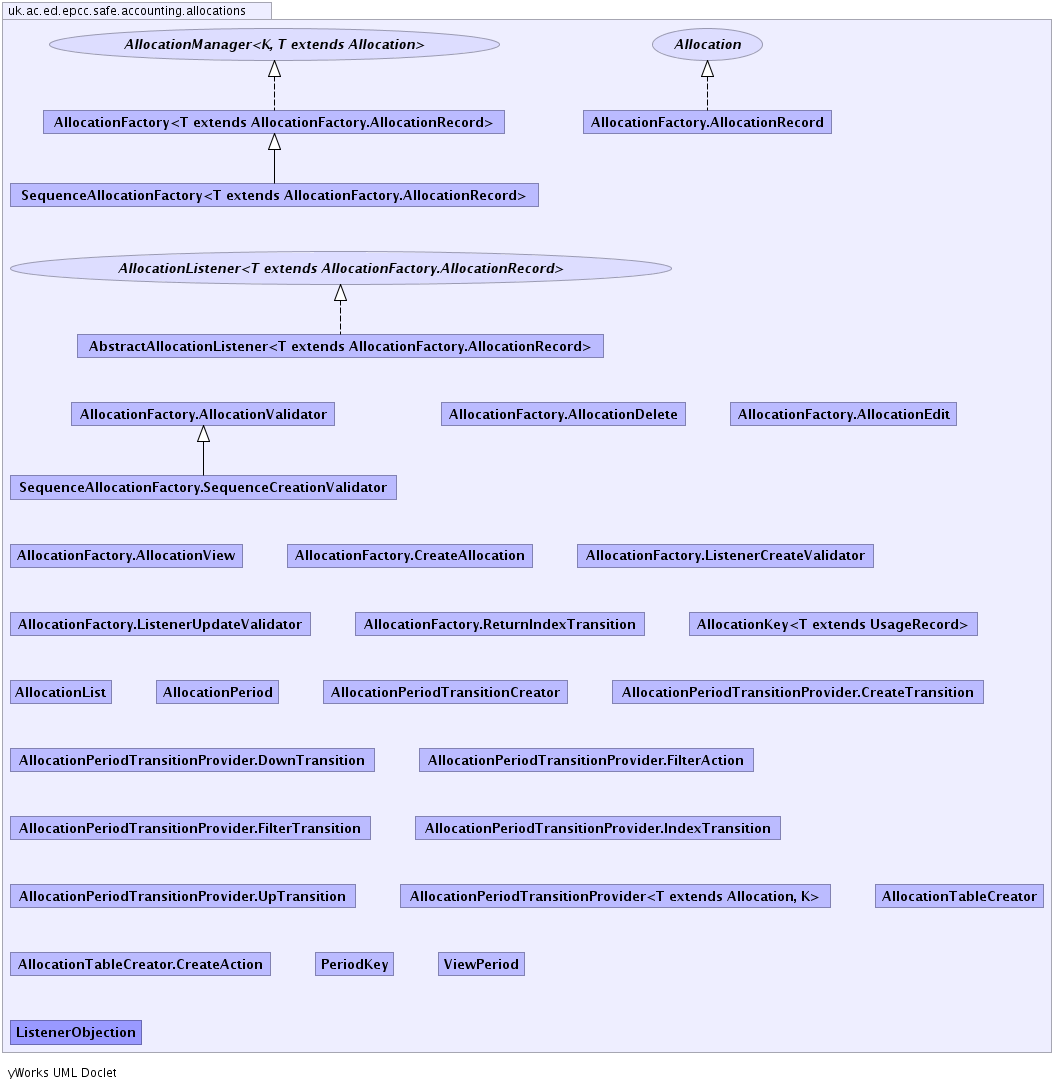
Interface Summary Interface Description Allocation AllocationListener<T extends AllocationFactory.AllocationRecord> Interface for objects that need to track changes to allocations or may want to veto certain operationsAllocationManager<K,T extends Allocation> AllocationManagers are the UsageProducer classes for Allocations and provide transitions to edit the allocations -
Class Summary Class Description AbstractAllocationListener<T extends AllocationFactory.AllocationRecord> AllocationFactory<T extends AllocationFactory.AllocationRecord> An Allocation represents a resource allocated rather than a resource consumed.AllocationFactory.AllocationRecord AllocationKey<T extends UsageRecord> Key object for AllocationFactory transitionsAllocationList AllocationPeriod AllocationPeriodTransitionCreator AllocationPeriodTransitionProvider<T extends Allocation,K> Provide a filtered view of allocations from a nestedAllocationManager.AllocationTableCreator Class to createAllocationManageraccounting tablesPeriodKey SequenceAllocationFactory<T extends AllocationFactory.AllocationRecord> AAllocationFactorywhere the allocations form non-overlapping sequencesViewPeriod This class represents the current time period that is being looked at. -
Exception Summary Exception Description ListenerObjection Exceptionthrown when aAllocationListenerwishes to veto a proposed operation
Package uk.ac.ed.epcc.safe.accounting.allocations Description
Classes supporting resource allocation.
Note that allocation mechanisms may be purely informational as in a fair-share system,
or they may involve an charging mechanism applied when the records are parsed.
The key observation here is that Allocations are UsageRecords. Except that they record allocated usage rather than actual usage. Many of the same types of reports might be made with allocation as with usage.